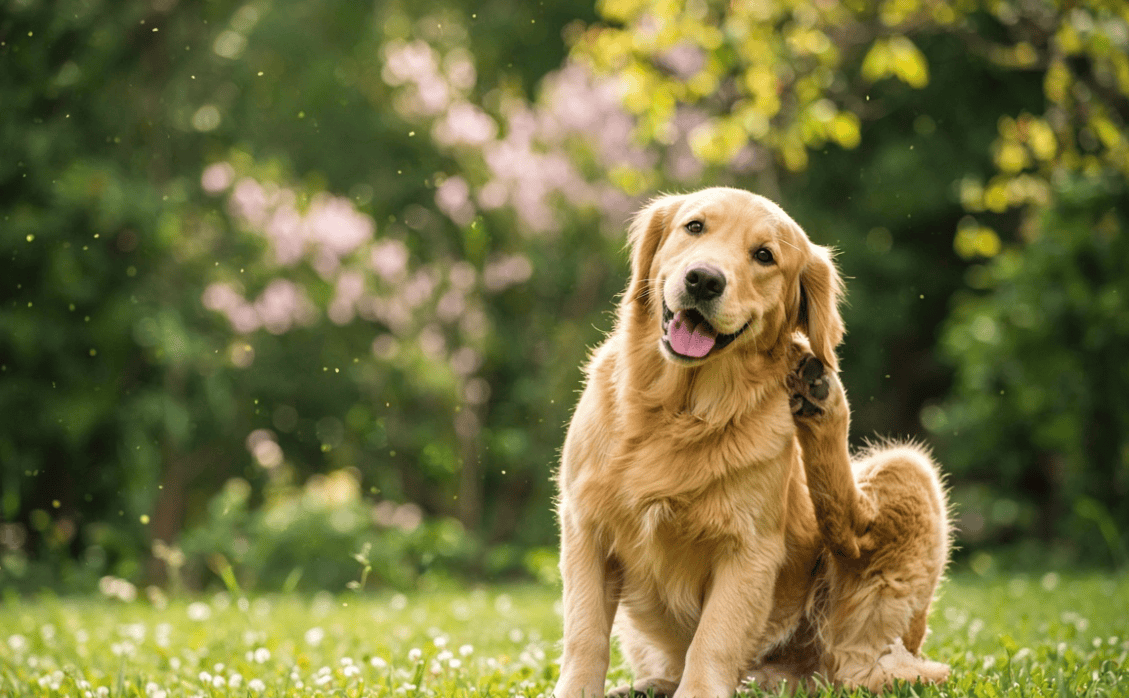
It’s one of the most common questions we hear: “I’ve already treated my dog for fleas, so why is it still scratching?” The good news is that ongoing itching after flea treatment doesn’t usually mean the product has failed. In most cases, it means your dog’s skin is still reacting to the fleas that were there, or there are still fleas in the home environment rather than on your dog.
Why the itching continues
Dying fleas still bite
Most flea treatments don’t repel fleas instantly, they kill fleas once the flea bites and feeds. That means fleas already on your dog can keep biting for a short window after treatment is applied, which can look like the treatment “isn’t working” when it actually is.
Flea allergy dermatitis
Some dogs are highly sensitive to proteins in flea saliva. In sensitive dogs, a reaction can appear almost immediately (within around 15 minutes of a bite) or be delayed by 24 to 48 hours, meaning the itching you’re seeing today may be a reaction to a bite from a couple of days ago, even if the flea itself is now dead. A single bite can be enough to keep a sensitive dog uncomfortable for days.
Secondary skin infection
Persistent scratching and licking can break the skin’s surface and allow a secondary bacterial or yeast infection to take hold, which will keep a dog itchy even after the original flea issue has been dealt with. Redness, odour, scabbing or hot, inflamed patches are signs this may be happening.
Is it re-infestation, or a lingering reaction?
It’s a fair question, and the two can look similar. A few signs point to true re-infestation rather than a lingering reaction:
- You can see live fleas or flea dirt (small dark specks that turn reddish-brown on a damp tissue) on your dog or in their bedding.
- Itching was improving, then increased again several weeks later, which can suggest the preventative has worn off or a dose was missed.
- Other pets in the household, or the home and yard itself, haven’t been treated, so fleas are continuing to hatch in the environment.
If none of the above apply and the itching is steady or gradually improving, it’s more likely a lingering allergic reaction working its way out of your dog’s system rather than a fresh infestation.
Modern flea prevention
Most current flea and tick preventives for dogs use an isoxazoline-based chew (the active ingredient family behind products such as Bravecto, NexGard and Simparica), which also treat and prevent certain mites. Whichever product you use, the two things that matter most are using it year-round rather than seasonally, and treating every dog and cat in the household, not just the one showing symptoms. See our individual reviews of Bravecto, NexGard and Scalibor for more detail on each option and how to apply or do them correctly.
Treating the home and yard, not just the dog
Fleas spend most of their lifecycle off your pet, as eggs, larvae and pupae in carpet, bedding, skirting boards and shaded areas of the yard. Treating your dog alone won’t clear an established infestation. A full environmental clean-up typically includes:
- Vacuuming carpets, rugs and furniture thoroughly and often, and disposing of the vacuum bag or emptying the canister outside afterwards.
- Washing your dog’s bedding on a hot cycle.
- Treating shaded, sheltered areas of the yard where your dog rests, where flea larvae can survive.
- Being patient: because of the flea life cycle, a full environmental clear-out can take up to around three months, even once your dog is fully protected.
When to book a vet visit
Get in touch if the itching hasn’t started improving within 1 to 2 weeks, if you notice hair loss, redness, odour or scabbing that suggests a skin infection, if your dog develops hot spots, or if you’re simply not sure whether what you’re seeing is a lingering reaction or a genuine re-infestation. We can also help you choose the right flea preventative for your dog’s lifestyle and any other pets in the household.
Frequently asked questions
Why is my dog still scratching after flea treatment?
Most often it’s a lingering allergic reaction to flea saliva rather than a sign the treatment has failed. Dying fleas can also keep biting for a short period after treatment, and scratching can sometimes lead to a secondary skin infection that keeps the itch going.
How long will my dog itch after flea treatment?
A mild reaction typically settles within a week or two. If itching hasn’t improved within that time, or is getting worse, it’s worth a vet check to rule out infection or ongoing exposure to fleas in the home.
Do dogs still itch after fleas are gone?
Yes, this is common in dogs with flea allergy dermatitis. Because the reaction is to flea saliva rather than the fleas themselves, sensitive dogs can keep reacting for some time after the fleas are dead or gone.
Is it normal for a dog to itch a week after flea treatment?
Some residual itching a week on can be normal, particularly in allergic dogs, but it should be gradually improving. If it isn’t easing up, or your dog seems increasingly uncomfortable, book a check-up.